
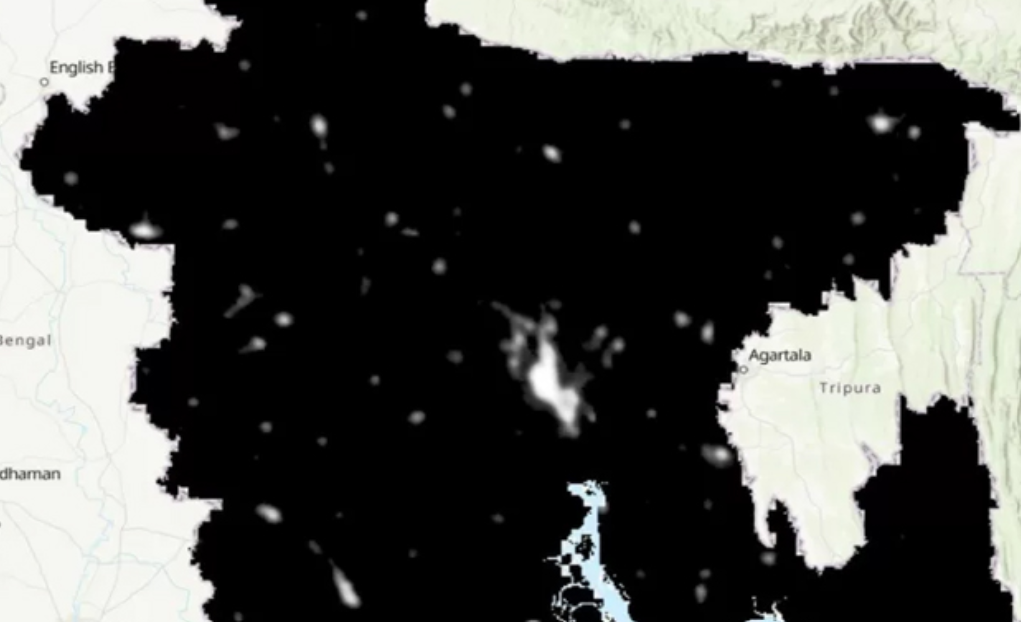
Scientists say that by analyzing the night images taken from the satellite, they found that human activity in river basins and floodplains has increased and as a result more people are at risk of flooding than before.
The brightness of the night has increased the most in the Sylhet region of Bangladesh in the last two decades. The flood has been affected by the night lights and some ideas about where the human settlement has developed in the country.
Three universities in the United States, Australia and Bangladesh jointly conducted this research.
As one of these studies, it is found that about 87 million people in Bangladesh are currently at risk of direct flooding - who live within two kilometers of rivers.
And those who are at risk of frequent flooding or severe floods are about two and a half million.
Although scientists are responsible for the terrible floods in the northeastern Sylhet and Sunamganj districts of Bangladesh, they say that the situation in Howr area has worsened due to the construction of various types of human infrastructure in the Howr area.
The study was jointly conducted by scientists from Pennsylvania State University, Australia and Chittagong University in Bangladesh.